Callejon: The Unwritten Rules of a Living Alleyway
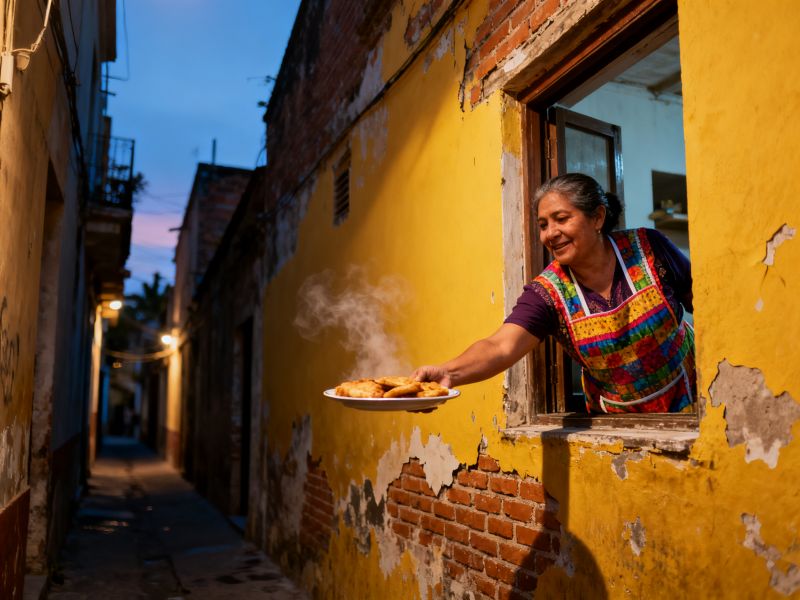
he narrow passage smells of rain-soaked stone and frying garlic. A callejon in the old quarter of any Latin American city is never just a shortcut—it’s a compressed theater of daily life. I learned this in Guanajuato, standing in a callejon so tight that two people couldn’t pass without turning sideways. A woman leaned from a second-floor window to hand a plate of tamales to a neighbor below. No words were exchanged. The callejon had its own choreography, and everyone knew the steps.Walk through any callejon and you’ll notice the walls do most of the talking. Peeling paint reveals layers of history—a faded political slogan from the 1980s, a stenciled Virgin of Guadalupe, a child’s chalk drawing half-erased by humidity. These aren’t decorative. They’re a public ledger. In one callejon in Valparaíso, Chile。residents repaint the same mural every year after the winter rains. The design never changes. When I asked why, a man shrugged: “Because it’s ours” That’s the unspoken contract of a callejon—private ownership of shared space.Safety works differently here too. A callejon with no through-traffic becomes a semi-private zone. Strangers are noticed immediately. In Mexico City’s Callejon del Aguacate, a retired teacher named Doña Rosa sits on a plastic chair every evening from six to nine. She doesn’t call herself a guard. She just watches. “If someone new walks in, I say good evening” she told me. “If they don’t say it back, I keep watching” That single exchange—a greeting returned or ignored—is the callejon’s first filter. It’s informal surveillance。
yes, but also a kind of hospitality test.Commerce adapts to the callejon’s dimensions. Carts squeeze through with inches to spare. A taco stand might occupy the same three square meters for thirty years, its owner knowing exactly how far the grill can protrude before blocking a doorway. In Buenos Aires, a callejon off the Avenida Boedo hosts a weekend book market where vendors hang canvas sheets between opposing walls to create shade. The whole market exists because of the callejon’s narrowness—the walls become shelves。the ground becomes a single aisle. You can’t scale that model to a wide street. The callejon forces intimacy, and commerce follows.What happens when a callejon gets “discovered”?I’ve seen two versions. In one, a street artist paints a massive mural, Instagram crowds arrive, rents rise, and the callejon becomes a corridor of gift shops selling miniature paintings of the mural. The original residents move to the edges. In the other version。the neighborhood association posts a simple sign: “Vecinos, no turistas” It’s not hostile—just clear. The callejon survives as a living space, not a photo op. Which version wins depends on whether the people who use the callejon daily have a say in its future. That’s the real test of any callejon: can it stay a place where someone still hands tamales out a window?
Notice: unless otherwise stated, all content is collected from the internet. If it infringes your rights, please contact us for removal.